MANY might baulk at the idea of owning an electric-powered vehicle (EV) in a regional area like the Alpine Shire.

If the $75,000 price doesn’t put you off, the idea of the battery running out of ‘juice’ for want of a charging station in the North East just might.

But, a growing number of intrepid locals have opted to purchase a Tesla, both for philosophical and financial reasons.

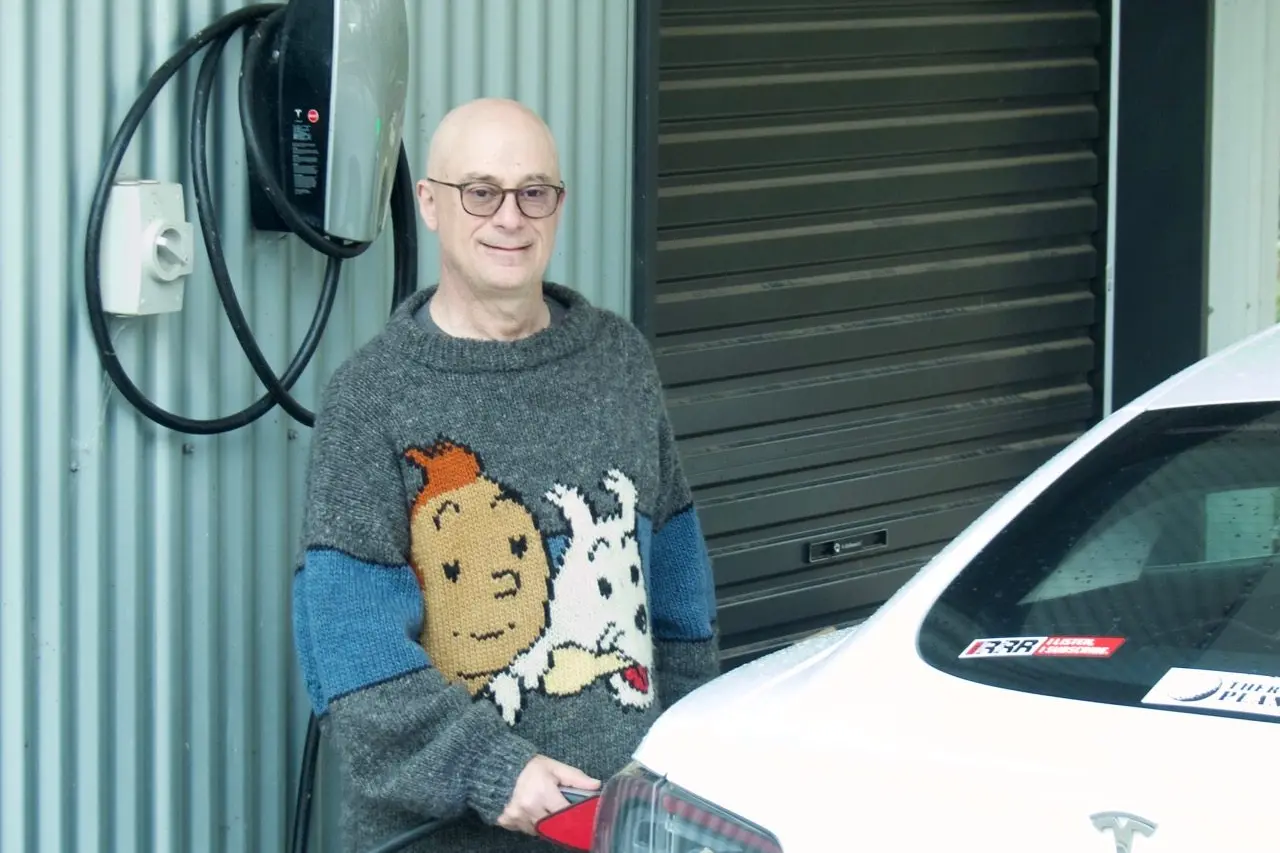
Eurobin’s Michael Block is one of them.

A member of Sustainable Upper Ovens Inc, Michael loves his 2015 model Tesla so much he says he’d never buy a combustion-engine powered car again.

He spoke to the Myrtleford Times/Alpine Observer about his EV experience…

What made you decide to buy an electric vehicle (EV)?

We decided to buy a Tesla Model S when we were downsizing from an inner Melbourne family home to the home we had rebuilt in the Ovens Valley. At the time there were around 200 Teslas in Australia (there’s currently over 8000) and they were already the world’s biggest-selling EVs. But, there was almost no charging infrastructure at that time and almost nobody knew what a Tesla was! Range anxiety is one of the hurdles to EV ownership. We were regularly commuting between Melbourne and here, a trip of around 325km each way and my ‘range anxiety’ lasted exactly one trip - 325km.

What is the Tesla like to drive?

It’s our everyday car. We do have a small petrol engine car, but we use the Tesla daily for everything from commuting, shopping to transporting bikes and goods. While everyone has read about how fast Teslas can go (and they can), the biggest joy of an EV is how good they are to drive slowly. They are very smooth to drive and have excellent throttle response. Regenerative braking happens when I take my foot off the accelerator; the car slows much like a manual gearbox car left in second gear. However, because the motor is now acting as a generator and feeding energy back into the battery, I can drive up Mount Buffalo using up almost 30% of the battery capacity, but I regain almost all that energy on the descent through regeneration, without touching the brakes. I only lose about 10km of range on the round trip.

What does it cost to run?

Firstly, the upfront cost is higher than many combustion engine cars, but not every EV is a Tesla and there are models at a range of prices in the current car market. The running costs though are quite low. I have lifetime free Supercharging for my car, it costs me nothing to drive to Melbourne. A driving trip to Adelaide cost me $12 for a hamburger and a coffee. We charge our car at home from rooftop PV during the day if we are there and that costs nothing, or we charge overnight at 18c/kWh. We never arrive empty or leave at 100% charge, and complete recharge will cost us around $12. Service costs are lower than an equivalent combustion-engine car. In fact, Teslas have no regular scheduled services at all, just replacing wiper blades and tyres, like any other car. I’m still running the original brake pads and discs after 200,000km as the brakes get quite light use because of the regenerative braking.

Is recharing difficult?

Charging infrastructure options have increased greatly over the years as electric vehicles become more common. There are at least two stations in the Ovens Valley and more in surrounding districts. There is a high-speed Supercharger station (for Teslas only) in Ovens and lower speed chargers in most towns and, of course, you slowly charge an EV from any power point in the country. I charge my car at home – I just must remember to plug it into my 30A home wall charger. I can set the charging to start during off-peak power periods, and an overnight full charge will give me around 400km range at a cost of around $8. Best of all, I pay city prices for my power and there’s no fuel surcharge. It’s difficult to drivers of petrol or diesel powered cars to see the existing EV infrastructure because EV charging options don’t stand out like petrol stations, except for Supercharger stations. Most EV owners charge at home overnight, or at their destination.

Will an EV suit everyone?

No, there isn’t one type of car that works for every single person, but an EV will work for most people and most families for most trips. It won’t be long before there are commercial EV vehicles with on-board 240V power and impressive towing capacity and long-distance electric trucks.

Would you buy one again?

You bet! In fact, I’ll never buy a combustion engine car again.