PHOTO
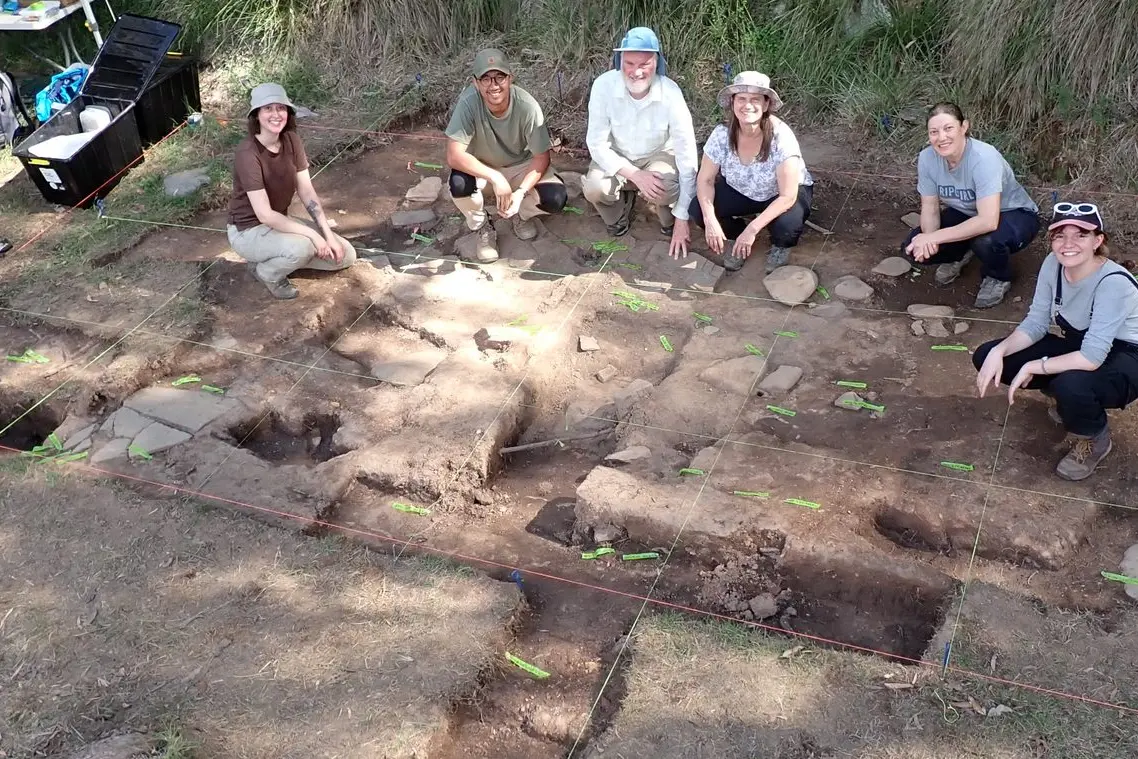
AN ongoing archaeological dig on the outskirts of Harrietville is continuing to unearth the hidden secrets of a former Chinese mining village dating back to the 1860s.
Over four weeks in November and December, 40 archaeology students and enthusiasts, led by a team of archaeologists from The Uncovered Past Institute, combed the site off Bon Accord Track, to deepen their understanding of the Chinese miners who lived there from approximately 1860 to 1909.
According to the Institute's president, Paul Macgregor, archaeology provides a unique window into the lives of Chinese gold miners, whose stories are otherwise hard to find in historical records.
"No map of the village was ever created at the time, and it was only a bushfire 25 years ago that revealed up to 25 distinct bench-flats cut into the hillside along the east branch of the Ovens River, on the outskirts of the modern town,” he said.
“Up to 100 Chinese miners may have lived in the village, with another 400 living in buildings dotted around the valleys of the east and west branches of the Ovens River.
"So at least half of the mining population of the Harrietville area was Chinese in the 1860s.
”There were several Chinese stores in Harrietville, and at least one temple".
The Institute has been excavating one of these bench-flats since their seasons began in 2017.
More than 10,000 fragments of metal, ceramic, glass, clay, bone and wood have been identified so far, from the two buildings on the bench-flat.
“The finds suggest a comfortable and culturally diverse lifestyle, with food and provisions imported directly from China, complemented with locally purchased English and Australian-made food and goods,” Mr Macgregor said.
"Brass trouser buttons and glass shirt buttons tell us that they wore European work clothes.
"They also smoked tobacco as well as opium, drank – and cooked with – European and Chinese liquor, served their food on British plates, but ate with chopsticks and ceramic spoons out of Chinese bowls.
"We have discovered no metal forks or spoons, and none of the plates have scratches on them, so we can be confident that they did not adopt European eating practices.
“The discovery of small round glass tokens in black and white version also reveals the miners played a Chinese board game called wei kai, similar to draughts, but so far there has been no evidence of gambling games.”
Four other digs were undertaken in October 2017, October 2019, October 2022 and January-February 2024.
The next dig at the Harrietville Chinese Mining Village will take place on November 18 to December 12, 2025.
For more information go to www.uncoveredpast.org.au.