PHOTO
By DENNIS LAMBERT, co-chair Sustainable Upper Ovens
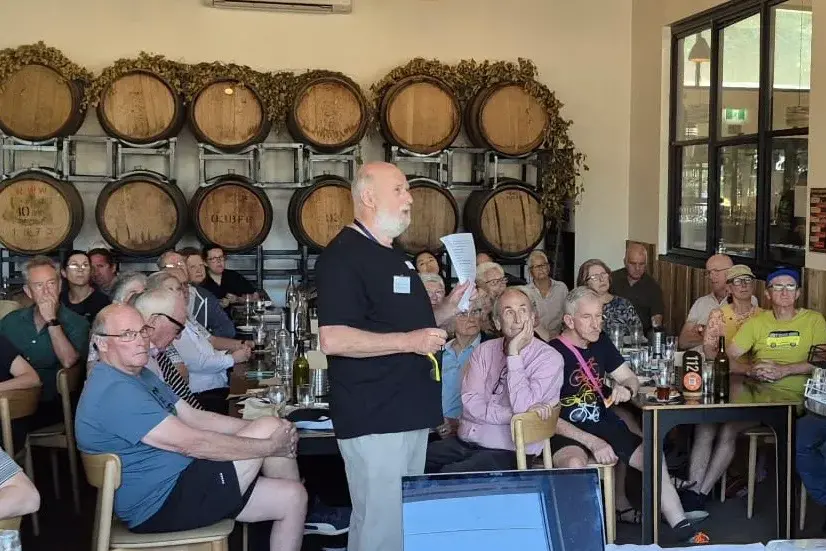
The Sustainable Upper Ovens (SUO) home battery information evening was a sell-out event, attracting 55 participants at Bright on 25 November.
Attendees heard from local experts, including Bobbi McKibben from Solar Integrity Wodonga, Xavier Waters from Alpex Electrical in Bright and Heath Shakespeare from Indigo Power.
A key takeaway from the event was quality solar PV systems and batteries are worthwhile investments; however, it is important to undertake research and find trusted local installers.
Xavier shared his experience assisting two residents over the last few weeks whose new battery systems were poorly installed and received no follow-up support.
Bobbi also cautioned attendees about the return of door-to-door salespeople, usually offering poor-quality, cheaper battery systems.
The advice here was against purchasing from cold callers.
The evening also gave SUO the opportunity to highlight the significant progress the Upper Ovens region has made over the past seven years.
Currently, 50 per cent of homes have solar PV systems.
New-quality solar PV comes with product warranties of 20 to 25 years.
These systems reduce living costs and provide a 10 to 20 per cent return on investment.
Some 14 per cent of homes have batteries with 10 to 12 year warranties, allowing the solar PV systems to operate when grid power is interrupted, yielding an eight to 12 per cent return on investment.
For comparison, a bank's term deposit typically offers only four to five per cent.
The challenge facing homeowners is determining the appropriate battery size to accommodate current and future energy needs.
It’s crucial to use the Cheaper Home Battery Program wisely, as it is available only once.
Residents need to consider if they have high-energy usage that can utilise excess solar energy, such as underfloor heating or electric vehicles, particularly given the three hours of free power some retailers are offering.
For about seven or eight months of the year, the Upper Ovens area exports excess power to the grid from our rooftop solar PV systems on many days when our community cannot consume it.
This is fantastic, but how can we store it and use it more effectively in our own community to benefit everyone and make us more energy and financially resilient?
A future microgrid and more publicly available power for electric vehicles could generate additional income for our community.
All are possible in the next five to 10 years.
Batteries are a vital step in this transition for both homes and electric vehicles."
The battery information presentation slides will be on the SUO website https://sustainableupperovens.org.au/.
More Australians to benefit from cheaper home batteries
The Australian government will expand its Cheaper Home Batteries program.
Minister for Climate Change and Energy, Chris Bowen, announced on the weekend that the program will be expanded to an estimated $7.2 billion over four years, an increase from the initial $2.3 billion.
He said this is expected to see more than two million Australians install a battery by 2030, delivering around 40 gigawatt hours of capacity, doubling the government's election estimate of one million batteries and increasing the expected capacity by almost four times.
In less than six months, the Cheaper Home Batteries program has helped more than 155,000 households and small businesses cut their power bills.
The 3.5 GWh of battery storage delivered over this period has increased home battery capacity in Australia to almost twice the level before the program – with half of these households also installing solar panels for the first time or upgrading existing systems.
Alongside increased support for the program, from 1 May 2026, the government will make adjustments to ensure the around 30 per cent discount is encouraging households to get the right sized battery for their needs and the program remains sustainable.
Under this tiered system, support will be staggered in line with the size of the battery, with support moderating per kWh for medium and larger batteries.
It remains that the first 50kWh of a system is eligible for support, for battery systems sized up to 100kWh.