PHOTO
65638.0
By JOHN TAYLOR OAM,
Myrtleford and District Historical Society Inc.
Wartime post cards, letters, photographs…all evidence of a variety of means used to stay in touch with relatives and friends, as conflicts proceeded across the world during the first half of the last century.
These mementos remain with us, quietly stored away in homes or museums, reminders of another time.
A well-known children’s book writer and illustrator, May Gibbs, was persuaded by family and friends to return from England to Sydney after a bout of illness in early 1913.
It was at this time she invented the 'Gumnut Babies' inspired by the nation’s flowering gums and wattles.
From the outbreak of World War 1 in 1914, the Gumnut Babies were 'recruited' to boost the morale of departing troops and those overseas, with a series of colourful postcards and bookmarks.
By 1917, the names of 'Snugglepot' and 'Cuddlepie' were well known by the public.
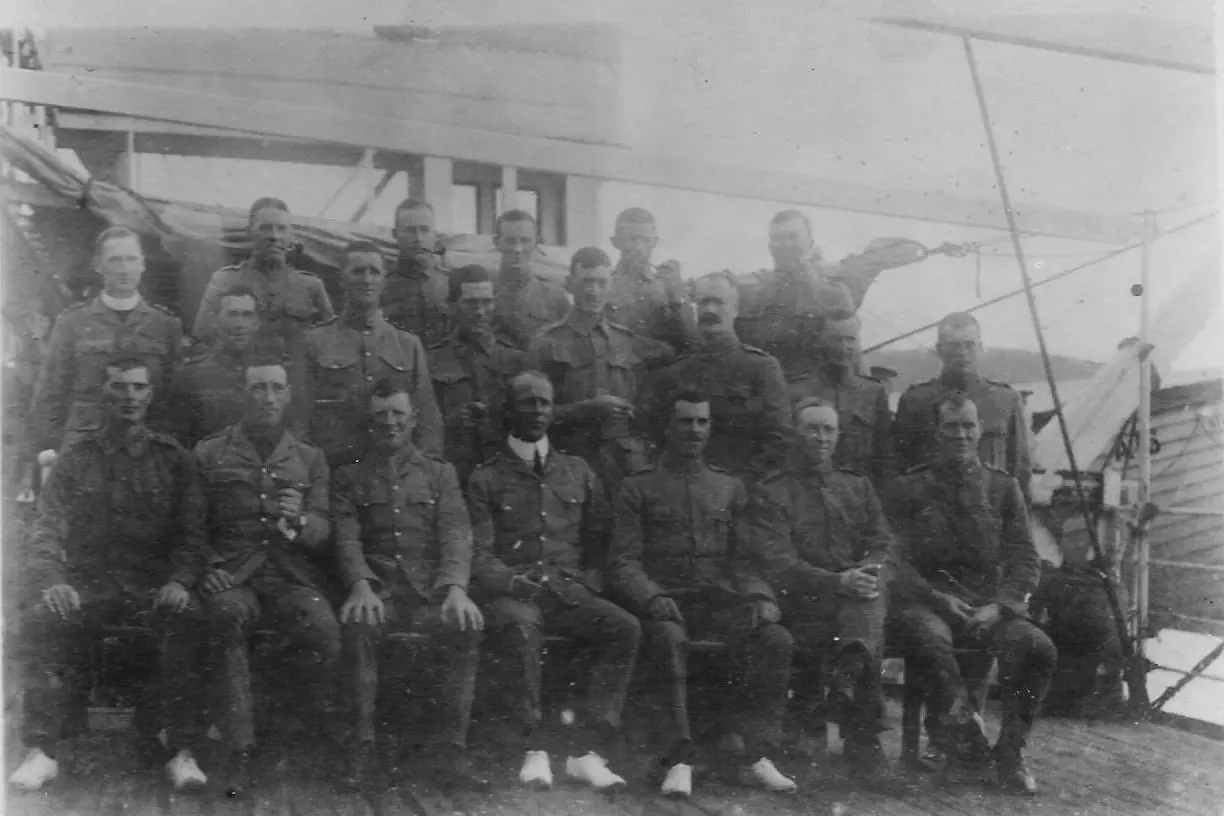
After training at Broadmeadows Camp, several local members of the 8th Lighthorse Battalion embarked on the troopship 'Star of Victoria' on February 25, 1915, destined for Egypt.
One of these troopers was Edward William (Ted) Croucher who had enlisted at Bright on September 14, 1914, aged 22.
A photo taken on the voyage was posted home from Egypt to his mother Emeline with this message: “To Mother, Best wishes from Ted. Please keep this, as I value it very much.”
Ted embarked for Gallipoli on May 16, 1915 but became ill and returned to hospital at Heliopolis.
He served out the war as a Saddler Sergeant with the Lighthorse and embarked for the United Kingdom on July 9, 1919.
Granted leave, he trained at Glasgow as a harness maker, then embarked for home on November 22, 1919.
In 1917, Elsie Carmody of 'Hillside House', Whorouly sent a message on a postcard to her brother Walter Daniel Carmody: “My Dearest Brother, Wishing you a Happy Xmas and a prosperous New Year, and the best of luck and good health, love from Elsie”.
Separate postcards were sent by Walter’s mother and father at the same time.
Walter survived the war, experiencing two bouts of illness and gunshot wounds to his legs in May and June, 1918.
Repatriated to Australia in August, he arrived home on November 6, but died at East Melbourne on July 18, 1919 the result of his injuries.
Unfortunately, his brother Harold Joseph Carmody had been killed in action in France on October 8, 1918.
James Frederick (Eric) Paul’s brief message accompanying a postcard of a village church in late October, 1916 was sent whilst he was convalescing on two weeks furlough in England.
It read: “A visit to Salisbury Plain”.
Eric had been wounded and was replying to the many letters and photographs he received from Buffalo Creek family and Myrtleford friends.
Eric had left Sydney on the 'Runic' after enlisting at Liverpool, NSW on June 26, 1915 and wound up on Gallipoli on September 29.
He became one of the last servicemen to evacuate from Gallipoli on December 20, 1915.
He then embarked for Europe and landed at Marseilles, France in March,1916.
Promoted to corporal in January, 1917 Eric died of extensive bomb wounds to his legs on March 3.
A small bag of his personal effects, including those letters and photographs sent to him, was returned to his parents on October 26, 1917.
Very few relatives were ever able to visit the grave of the fallen of World War 1, so photographs and post cards of the gravesite were forwarded to relatives.
In October, 1922 Annie Willoughby, mother of Gunner James Walter Dundas Gale, wrote to the Army Records Office from Buffalo River South: “I have received the postcards of the grave of my dear son. I am very grateful for getting them to me.”
James had enlisted in the AIF on January 24, 1916, sailed on the troopship 'Medic' to England, arriving at Plymouth on July 18.
On New Year’s Eve, 1916, James was posted to France, a member of the 7th Battery of the 27th Australian Field Artillery Brigade.
Nine months later James, aged 22, was killed in action in Belgium, on September 28, 1917.
Prior to Warren William Barton’s departure for the Middle East on June 28, 1941, he received a card entitled “Good Luck be With You…All the Best, Warren”.
It had arrived at his Prince Street home, from Elsie and John Connell of South Yarra.
Warren had enlisted in the AIF on July 29, 1940.
In regular contact with family and friends, Warren sent replies: “Greetings from the Holy Land for a Merry Xmas and a Happy New Year, 1941”.
Warren would serve in the AIFs ordinance workshops for 611 days in Palestine, until February 20, 1943, and then return to Australia to continue service until December 19, 1945.
Until the very end of World War 2 in 1945, postcards from the South-West Pacific theatre of war were limited, except in circumstances when service personnel returned to northern Australia for reassignment, training or important medical treatment.
Initial medical attention in 1942-45 at places such as Port Moresby, Buna, Lae and the Solomon Islands, for tropical diseases and wounds (complicated by conditions of weather and terrain), often compelled a return to an Australian port.
Of particular impact was malaria.
Repeated infections and exhaustion meant hospital ships, including the 'Kanimbla' and 'Centaur' conveyed patients to Australian ports.
It was at the ports of Sydney, Brisbane, Mackay, Rockhampton or Townsville that service personnel were able to buy sets of postcards advising family with brief messages like, “To Mother, With Love, Jack”, without breaching security guidelines.
Today, all the mementos above are important personal records of another time.
“LEST WE FORGET”