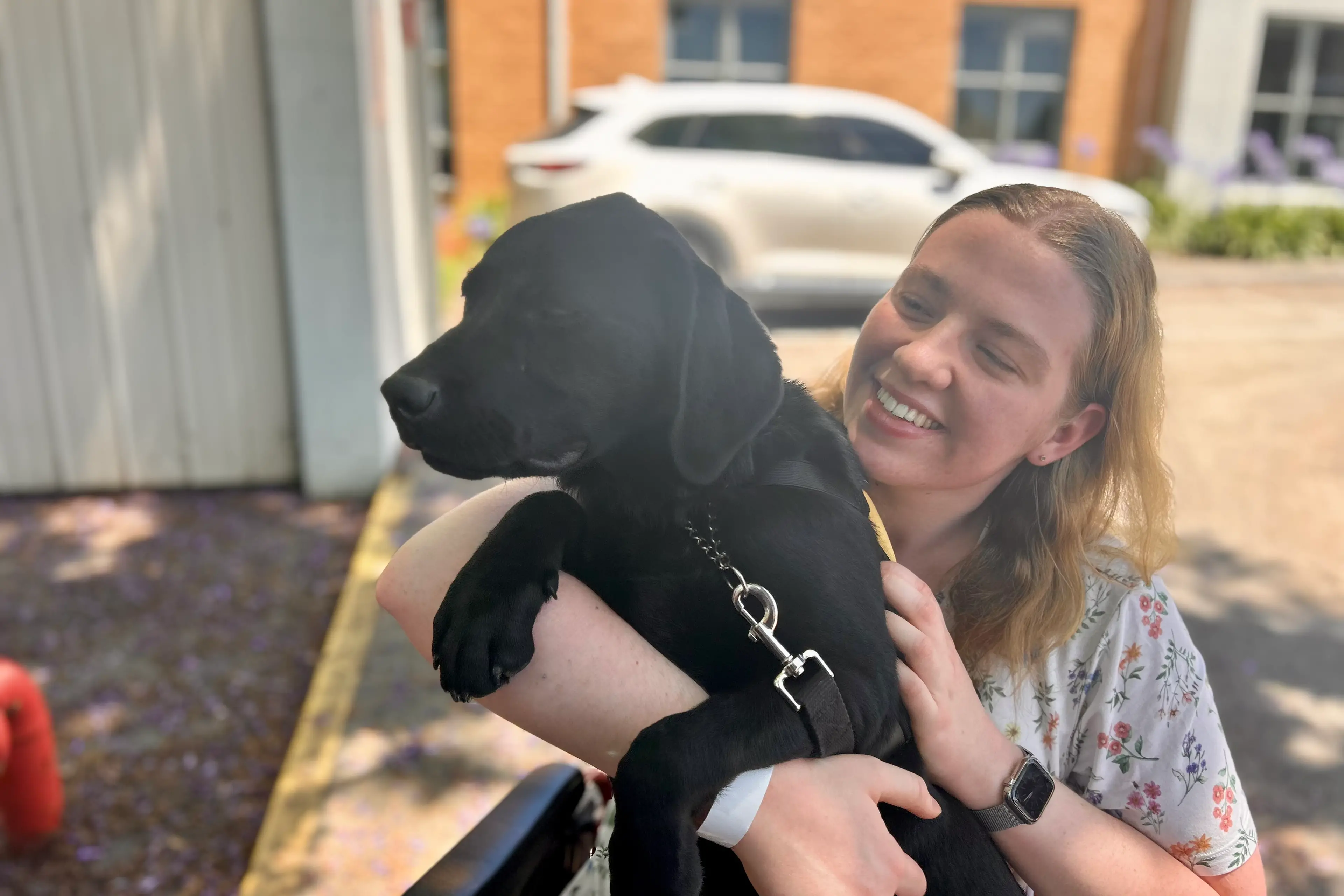
Sophie Bussell is savouring every moment of life after overcoming a mystery illness that snatched her ability to walk while navigating a personal journey to find a diagnosis.

The Carboor resident was already living with a condition that causes her heart rate to rapidly increase upon standing, leading to dizziness, severe fatigue, and fainting.

This is called Postural Orthostatic Tachycardia Syndrome (POTS).

But everything was about to get so much more challenging after she collapsed at school at the end of 2024, with her POTS and chronic fatigue only disguising the new and present condition of Functional Neurological Disorder (FND).

Sophie found herself in hospital, unable to move her legs, let alone walk, and the doctors were baffled as they mistakenly linked her symptoms to her existing conditions.

"So many people don't know about FND and this contributes to the lack of understanding or being able to diagnose and treat it," she said.

"It took me nearly a whole year to be diagnosed, and almost becoming a paraplegic in a wheelchair for nine months, because nobody knew anything about it.

"Doctors assumed it was POTS and chronic fatigue that I was already diagnosed with and they were incorrectly linking the weakness in my legs to these conditions."

Sophie travelled to Melbourne to be tested by a neurologist and she was eventually diagnosed.

"It's not a hardware problem, it's a software problem and it's like if you send a message to someone but it gets lost on the way and is never delivered to its destination," she said.

"The brain sends a message to your legs to walk and you say lets get up and walk and the message never gets there and your legs don't move."

Sophie experienced another hurdle as she was 17 at the time and adult rehab facilities wouldn't accept her and children's rehab would also not accept her because she was too close to turning 18.

Strongly determined to return to better health, Sophie attended the FND rehab clinic at the Epworth Hospital and she explained that therapists taught her ways to trick her brain into working properly.

"Originally when I started to walk again I used dancing and walking to the beat of music to help," she said.

"I had been learning piano for 12 years and those pathways were already in my brain and we used them to help the walking pathways and we'd play music and dance to it and the movements would go more smoothly as the pathways were already really strong there.

"The key to FND is trickery and for example they would get me to walk on my tippy toes while bouncing a balloon in the air.

"You're trying to distract your brain so it's not focusing on the process of walking, it's focusing on something different and the walking just happens naturally."

Sophie works with an occupational therapist and a neuro psychologist and they help her form strategies to reassure your brain that it doesn't have to worry about risks associated with fight, flight, freeze responses.

"You have to talk to your brain as if it was a person, it's like 'hey brain, thanks for trying to help me, but you don't need to worry, I'm perfectly safe here, let's just keep going with what we're doing'," Sophie explained.

After months of doing this every day, all day Sophie's symptoms started to improve because it's about rewiring the connections and retaining the brain to work a different way.

Sophie will be busking in Wangaratta's CBD near the NAB Bank to raise money during the Easter holidays, and you can also donate online to her fundraising campaign, which will go to FND Australia Support Services, at https://gofund.me/c1f644f71.

If you would like to contact Sophie for more information email mylife.sophieb@gmail.com.

Functional Neurological Disorder (FND)

FND is a less commonly known condition and it's estimated that 21,500 are living with the disorder.

It is a condition where the brain improperly sends and receives signals, causing real, involuntary symptoms like paralysis, tremors, and seizures.

It represents a "software" rather than "hardware" issue in the nervous system.

Treatment is multidisciplinary, focusing on "retraining the brain" through physical and psychological therapies.

It is caused by a problem with the functioning of the body's nervous system and how the brain and body send and receive signals.