PHOTO
JOHN Wymond admits he has gold fever.
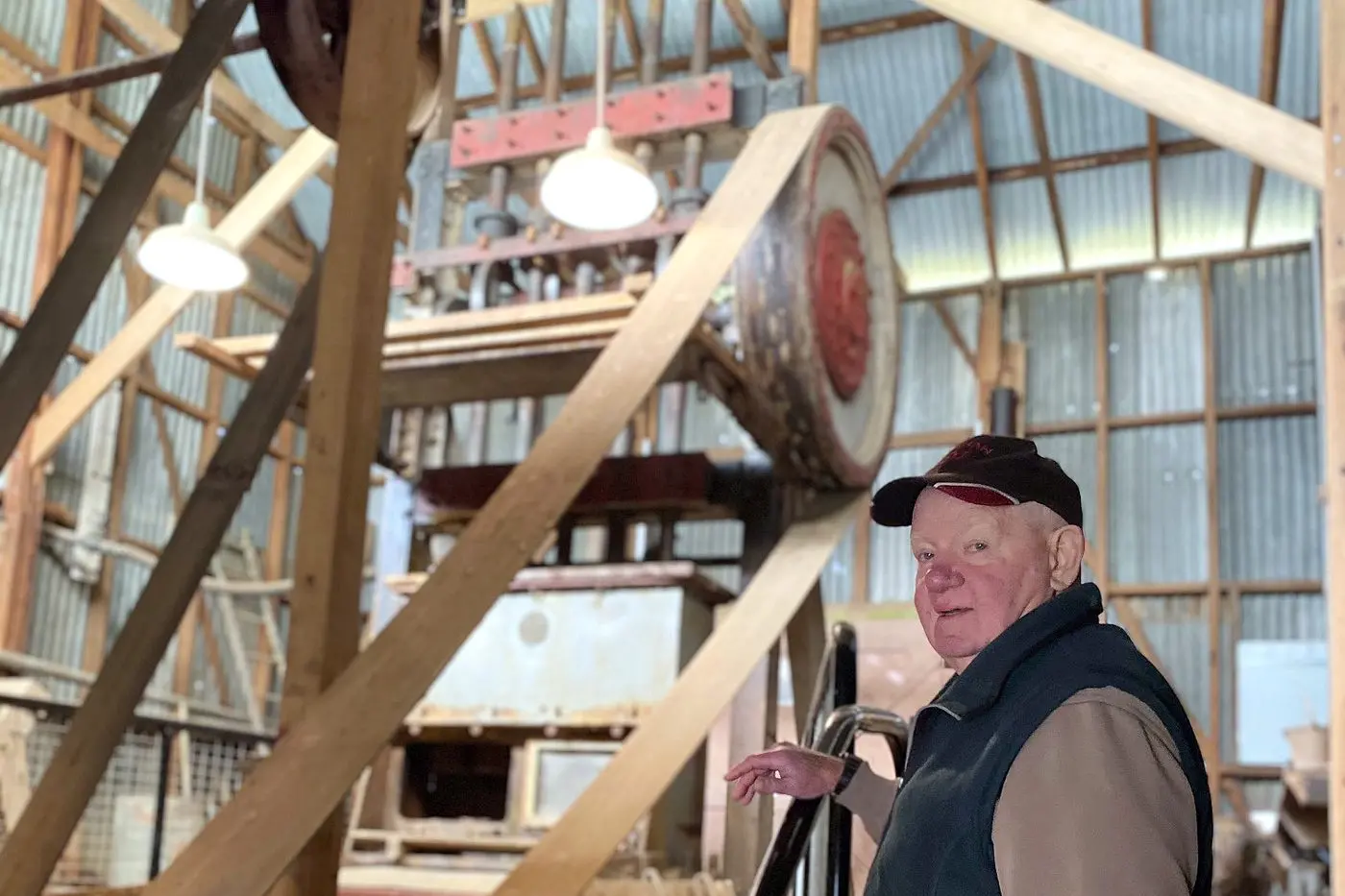
It is what’s driven him to lead the Bright and District Historical Society team that set up the town’s latest tourist attraction, the new-look gold mining exhibit depicting the history of mining in the district, which is housed at Bright’s historic gold battery.
An enlarged version of the gold mining exhibits at the society’s museum in Railway Avenue, the new mining exhibit is housed in the manager’s quarters adjacent to the town’s gold battery.
It will open to the public and tour groups in September.
For Mr Wymond, the project has been a labour of love.
“My ancestors were gold miners in the west, so I reckon I was born with gold fever in my blood,” he said, having led the society’s team of volunteers who’ve restored the two buildings and created the mining exhibition.
“The whole idea is to create a tourist attraction for Bright.
“People who visit the town have no idea that Bright was established because of gold mining.
“But, it’s been a challenge to restore it because after the battery closed down the site became a bit of a mess.
“It was overrun with blackberries, the fence crushed in places by fallen trees, and white ants got into the building's wooden frame.”
While the battery was restored and is already open to the public one weekend a month, until now the manager’s residence had been off limits until society members had the idea of restoring it to house an expanded version of the museum’s existing gold mining exhibits.
The project has been a collaboration between the Bright’s Men’s Shed and the historical society volunteers Andrew Swift, Diann Talbot, Rob Kaufman and Mr Wymond.
In recent years, work has continued to a plan drawn up by Mr Swift, with the removal of asbestos sheeting and relining of the interior, safety railing and interpretive signs installed explaining how the battery operated, and how gold was extracted and smelted on site.
Display boards and benches have also been built telling the story of gold mining in the Upper Ovens over 170 years.
The society enlisted the help of Alpine Shire Council to remove the asbestos in the building and it had provided invaluable support over the course of the project, which involved removing an internal wall to create a single room, lining the walls and installing the displays.
Both the main museum and the battery are closed in the winter months of June, July and August, but both buildings will now be open the public on the last weekend in September.
Like so many local organisations, the society would love to have more members willing to give their time.
“Unfortunately, we don’t have volunteers to open every weekend,” Mr Wymond said.
“But, as well as the last weekend of the month, the battery and mining exhibits will be open for private tours by groups by arrangement with the museum.
“We’d love to have more volunteers so we could open more often.
Yes, that would be gold...