PHOTO
By JOHN TAYLOR, OAM
1959 saw the end of a 57-year-long journey to a permanent hospital site in Myrtleford.
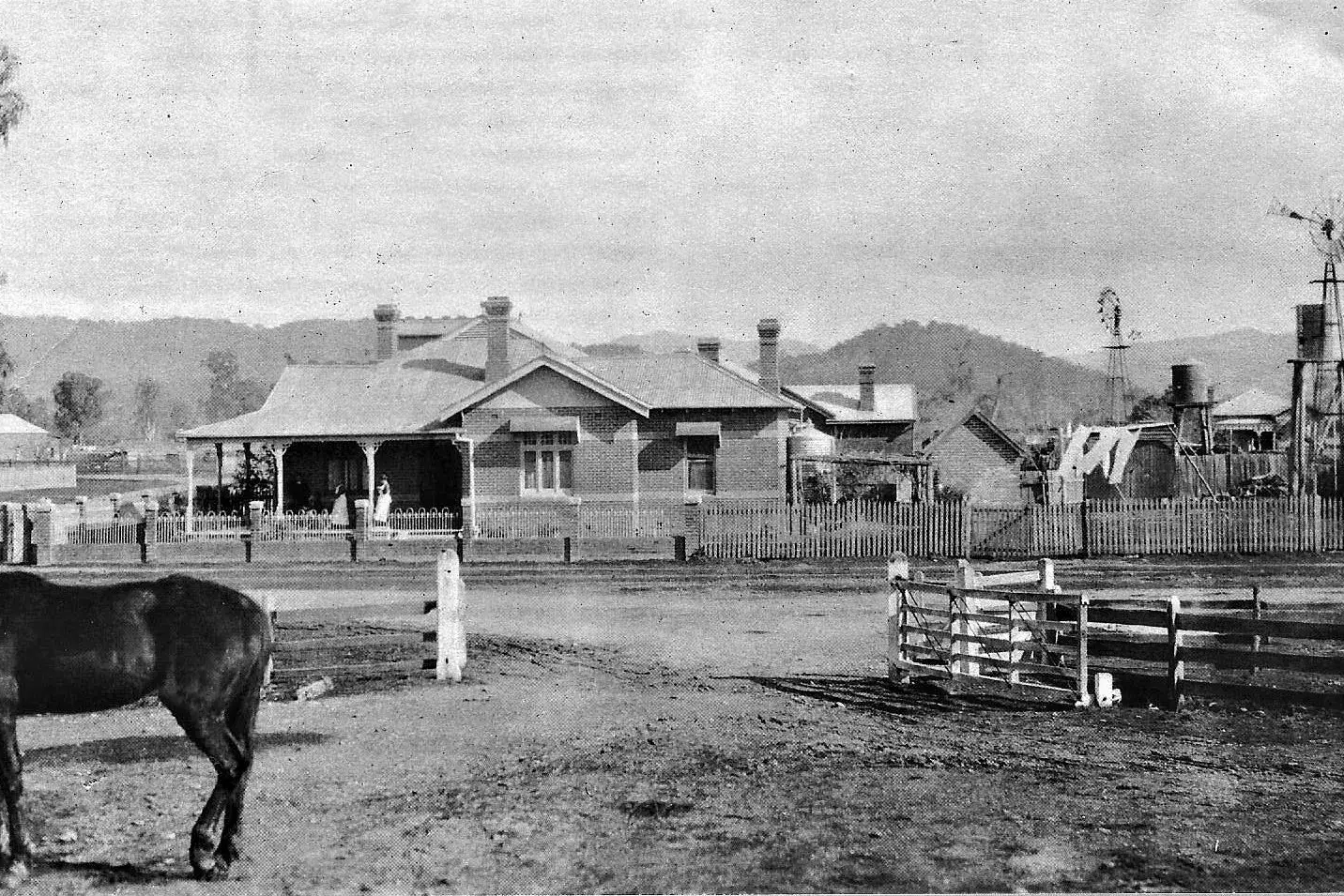
The town's first had been a six-room, privately owned hospital, 'Leybourne House' in Myrtle Street, leased in 1912 and managed by Sister Ruth Osborne, with nurse Louise Mills and nurse C. Lowerson also on staff.
Early in 1913, Sister Osborne purchased a house in Jones Street (between Smith and Myrtle streets) owned by Mr Frank Dundas, who had built another larger dwelling next door.
The new, busy hospital, named 'Bogong Road Hospital', was managed by Sister Osborne (who had married Mr JE Milne) until 1918.
The hospital was then conducted by nurse Forbes.
When the Dundas family left for Wangaratta in 1920, the hospital moved into the larger building, on the corner opposite the 'Big Tree' and railway station.
Dr Beaumont had a dispute with Sister Frost, who had become matron, so he opened another hospital at 14 Smith Street.
Occasionally, Wangaratta doctors visited Sister Frost’s patients; eventually, both hospitals agreed they were experiencing too much difficulty recruiting wartime staff and at the request of residents, Sister Milne returned to run one hospital at the corner of Smith and Jones streets.
Wartime shortages of supplies and staff, highlighted by the RSL and Dr Beaumont, led to resounding support for a 'Myrtleford Bush Nursing Hospital', established in 1945.
Public support then grew for a new war memorial hospital and land for a site was acquired from Mrs Edna Lack in 1946.
Meanwhile, in 1950 the old hospital was renamed the 'Myrtleford District Hospital', fundraising efforts continued and the new hospital site was prepared in 1953.
A foundation stone of the 'Myrtleford and District War Memorial Hospital' was laid in March, 1959 by Mr DG Browne, JP, MBE, president of the Myrtleford RSL sub-branch.
On October 11, 1959 the 16-bed hospital was officially opened by Sir George Holland, C.B.E., M.M., national president of the RSL and patients were transferred to it, (on the current site of Alpine Health) on November 30.
Across town in Prince Street, opening of a new Infant Welfare Centre was also to occur.
Today, five hospital buildings, three doctor’s residences and two infant welfare facilities continue to bear witness to how the district met the needs of the community over the century, 1860-1960.