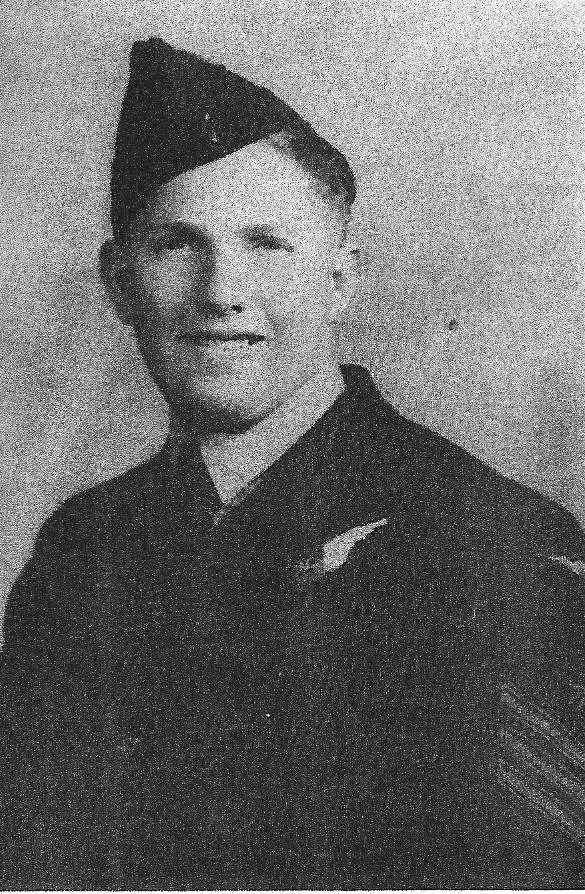
PHOTO
By JOHN TAYLOR OAM, Myrtleford and District Historical Society.
AT each commemoration of ANZAC Day we also have the opportunity to acknowledge those who had left homes elsewhere to serve their country during World War I, but who eventually came to this community as ‘Soldier Settlers’ seeking a new life.
Through the Closer Settlement Board, the Myrtleford district provided allotments on which to farm following the subdivision of the old estates at Barwidgee (Mudgegonga), Happy Valley, and also Merriang and Whorouly Estates further to the west.
Under the Discharged Soldier Settlement Act, 1917 ballots and interviews were held with soldiers by members of the Land Purchase Board.
Robert Hunter
One of these soldier settlers was Private Robert Hunter.
He does not appear as an enlistment on the Myrtleford War Memorial.
Hailing from Glasgow, Scotland he had migrated to Australia from Ireland in 1906.
He had enlisted in the AIF at Swan Hill on July 26 1915, becoming a member of 29th Infantry Battalion.
He married wife Eva at Yarraville in December and embarked from Melbourne for the Western Front on the ‘Anchises’ on March 14, 1916.
At Pozieres on August 4, 1916 Robert was wounded by an exploding shell, suffering shrapnel wounds and shell shock.
His 46th Battalion had been assigned water and munitions carrying duties for the 23rd Battalion which had been attacking enemy trenches on Pozieres Ridge.
Hospitalisation in England followed and on February 13, 1917 he returned to Australia.
In March 1919 he was successful in obtaining farming allotment 11A of 170 acres in the ‘Barwidgee Soldier Settlement’, which extended from Mudgegonga to Happy Valley.
Robert and Eva arrived at Happy Valley with three children in 1921 and four more were to be born there.
The nearby Happy Valley Estate State School was available to attend.
In common with other settlers, the challenges of dry weather, rabbits, St John’s Wort and lack of fertilizer created great difficulty.
Then there was the issue of finances and debt, including repayment of a lease of 1,472 pounds to the Land Board and payments for livestock, equipment, building materials and supplies bought locally.
There was also the issue of Robert’s ongoing tremors and flashbacks from the war.
Of the 46 settler allotments sold to soldiers on the Barwidgee Settlement, only eight would continue long term occupancy.
Like many settlers, Robert eventually lost his ‘Battle for The Farm’ and relinquished his holding in 1929, moved to Wangaratta and became an AMP insurance agent.
He then moved to Benalla, where he farmed with assistance of family members on 385 acres seven kilometres from town, until 1952.
The last four children of 12 had been born in the 1930s at Benalla and Robert and Eva shifted to Albury where he died in 1963.
Thirty years on from the challenges of soldier settlement, on ANZAC Day, 1954 Memorial Gates were dedicated during the Myrtleford Centenary at the war memorial precinct, the pillars listing the ten local men who lost their lives serving in World War II.
Many served, in fact the ‘Roll of Honour’ for the three armed services from all corners of the Myrtleford district listed 150 on the front page of the Myrtleford Times on June 24, 1942.
Subsequently, a Memorial Clock was erected to collectively commemorate service in the Korean War, the Malayan Emergency, the Indonesian Confrontation and in Vietnam, Iraq and Afghanistan, as well as peacekeeping ventures in Cyprus, the Solomon Islands, Bougainville, East Timor, Somalia and the Sudan.
This clock was erected on December 5, 2012.
Walter James Ellen
Flight Sergeant Walter J Ellen was one of an air crew of seven who perished when their Beaufort Bomber lost engine power near Bairnsdale, Victoria enroute to East Sale Airbase at 4pm on December 6, 1944.
They had been returning from operations in New Guinea, flying via Cairns to Victoria.
Wally Ellen, aged 20, had grown up in the district, the Myrtleford Times recording him “as the only son of Mrs B R Jennings and the late Mr M Ellen”.
“He enlisted in the RAAF about 18 months ago…… He had been a herd tester, at which he was proving adept.”
The town flag and ‘Lest We Forget’ pennants were flown at half-mast throughout Sunday, December 10 and Walter Ellen was buried with full RAAF honours near Bairnsdale on the following day.
The newspaper reported that “Mr and Mrs Jennings, Miss Madge Ellen, Mrs W Currie and Mr Alf Richardson travelled to the funeral, where amongst the floral tributes were those from the 3SR Friendship Club and the Myrtleford Fire Brigade”.
Geoffrey Douglas Mummery
Geoffrey Mummery was one of three sons and two daughters raised by parents Walter (Jim) and Lillian Mummery at their farm at Merriang.
During World War II two sons, Harold James and Geoffrey Douglas, enlisted in the RAAF.
Geoffrey had been employed at the local State Savings Bank and was an all-round sportsman.
He enlisted on September 16, 1942 and before leaving for England, he returned home on leave for a few days in March and May 1943.
He was a Warrant Officer and wireless operator.
On March 14, 1945 the Myrtleford Times reported that “WO Geoffrey Mummery had been posted as missing from an air operation over Germany”.
As part of Bomber Command, his air crew was on a mission to bomb a synthetic oil refinery in a suburb of Hamburg on March 7, 1945 when their Lancaster was shot down by an enemy nightfighter at 10:15pm.
The front fuselage had been attacked, killing five crew members, including Goffrey Mummery. It was his 25th operational sortie.
Crew members were buried initially at Elsdorf and then at a British Military Cemetery at Soltau.
Back home, the Myrtleford Post Office advised the RAAF of a telegram delivered to the family at 10am on Sunday, March 16, 1945 of the loss of Geoffrey.
Geoffrey Street, Myrtleford is named in honour of his sacrifice.
Lest We Forget