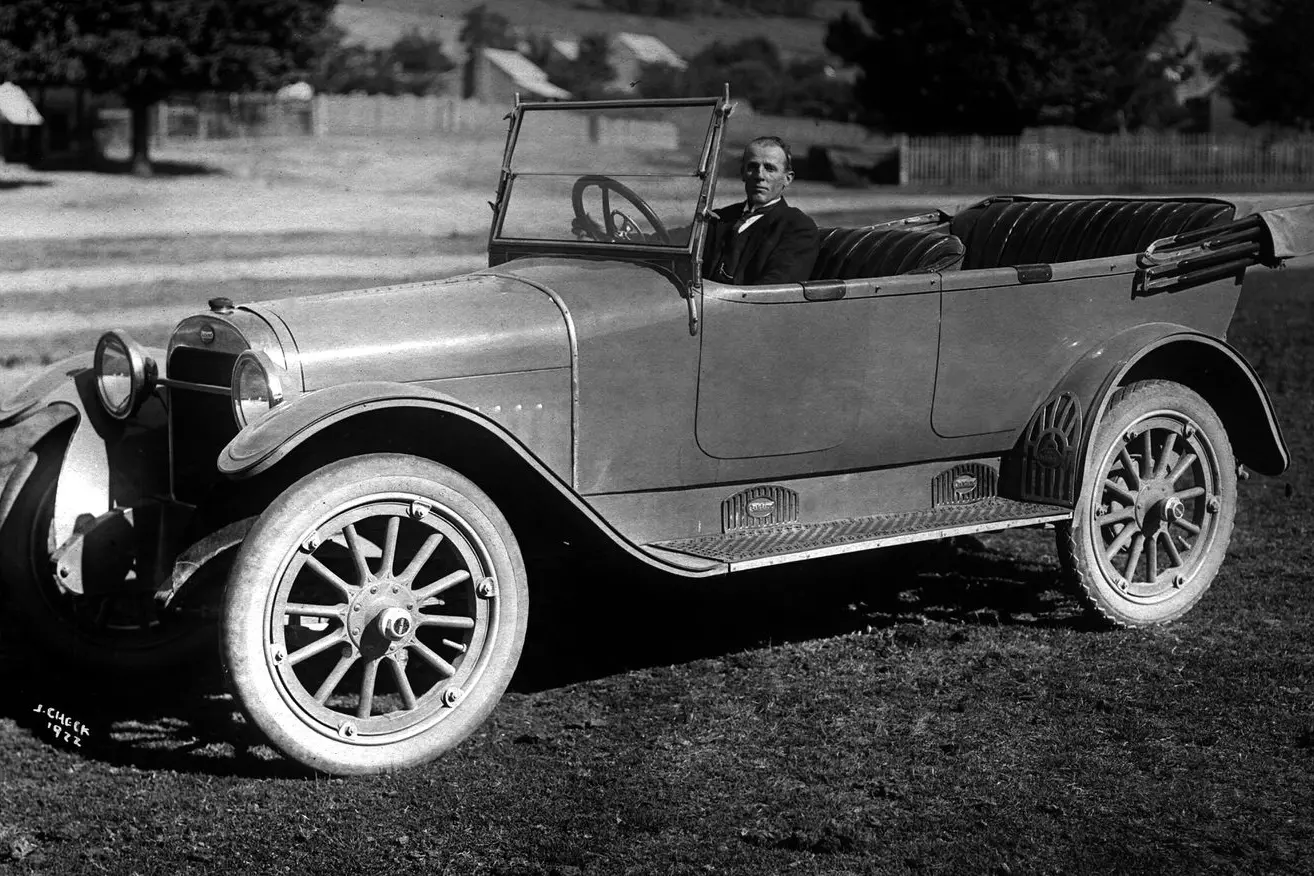
PHOTO
By JOHN TAYLOR OAM, Myrtleford and District Historical Society Inc.
UNTIL the 1920s Myrtleford's only form of public transport was the railway, which enabled residents to visit acquaintances or businesses in nearby towns on an early morning or afternoon journey.
Train travellers who arrived in town either walked or were picked up by horse and gig and conveyed to their destination.
Cars were seen in the district infrequently, owned by a few.
These included: Dr GS Sutton, after arrival in town in 1912 drove a French vehicle, the town's first; Reg Robertson drove his father JB's 'Buick' around town from 1924 and Samuel McGuffie purchased a 'Dodge' in 1928.
In 1920 one local driver, Richard Henry ('Harry') Jackson, had seen the need for readily available public transport.
Aged in his thirties, he acquired a new car in 1921 and for six years operated the town's first taxi service.
He owned three cars in this time; his prime purchase was a 1922 model 'Oakland 6–44 Tourer'.
Harry Jackson was a twin brother of Bert (with whom he shared athletic ability) and six other siblings.
He attended school at Happy Valley, then worked on local farms, including Panlooks Hop Gardens.
He became an engine driver on a dredge at Smoko and then in New Zealand.
Taxi destinations varied and included sightseeing tours up a single lane track to Mount Buffalo when motor vehicles had become the preferred means of transport, replacing the use of horse–drawn carriages up the mountain.
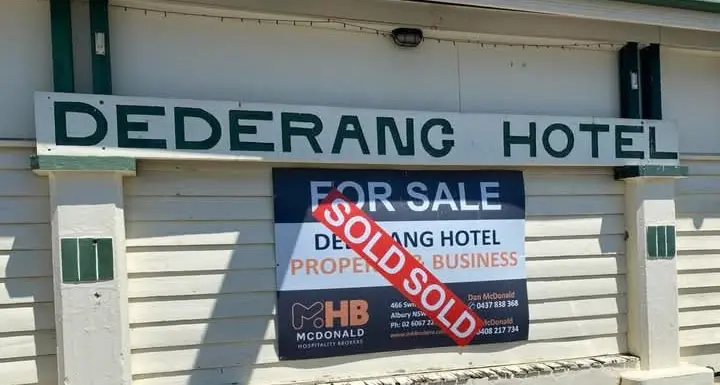
On other occasions, Harry's cab conveyed patrons to picnic race meetings at Dederang or Yackandandah or to football fixtures as far away as Moyhu, Tarrawingee and Beechworth.
Harry worked in Shepparton as a council contractor and returned to Myrtleford to work odd jobs and as a carpenter with his brother Percy from 1950.
On September 25, 1957 the 'Myrtleford Times' reported: "LOCAL RESIDENT FATALLY INJURED: Shortly before 5:00 pm on September 23, a fatal accident occurred on the Ovens Highway near Simmonds Corner...... he died of injuries received riding a bicycle, struck by a car travelling in the same direction."
Myrtleford had lost its first taxi driver, aged 72 years; he would be buried at the Pioneer Cemetery on October 2, 1957.
In 1922 Harold J Trezise commenced another hire car service from his garage opposite the Railway Hotel in Standish Street.
He offered an extensive repair service, "available day and night, phone 18" and had 'Buick Tourer' cars for sale.
His home adjoined his place of business on Duke Street.
Harold had been born at Hillsborough (near Stanley) and came to Myrtleford in 1918.
He mined at Barwidgee Creek and, like many his age, continued his involvement in gold mining for 17 years including during the Great Depression (1929—32) to provide for his family of nine children.
He prospected on the Buckland River throughout a decade to 1939.
Harold's eldest son Allan managed the garage and car hire business when Harold was away prospecting at his camp some 23 miles up–river from Porepunkah.
The Buckland in 1939 became a challenging place for the Trezises on two occasions.
In mid–January 1939, at the height of the 'Black Friday Bushfires', Harold fought the flames while family members were concealed in barrels covered by wet hessian bags to save them from smoke and flames.
Then on June 28, travelling back to camp with his 16 years–old son Cyril ('Snowy'), Harold fell from a log traversing a roaring Buckland flood.
A pole he was using to steady himself slipped off a rock causing him to fall and perish in the stream.
Cyril ran 9 miles downstream to Hall's farm to raise the alarm.
Harold's body would not be recovered for a week.
In what was described as a "RIVER TRAGEDY", the 'Myrtleford Times' reported on June 29 and July 5: "A married man and hire car proprietor is believed to have been drowned; First Constable WJ Miller of Myrtleford, Bright Police and other helpers commenced a feverish search ......during the recent bushfires he had a remarkable escape from death."
Harold Trezise was eventually buried at the Pioneer Cemetery on July 11, aged 47.
Such stories acknowledge the contribution of two men who initiated public transport in the district between the two World Wars, and many other operators would follow them.