PHOTO
WHAT'S the difference between an Envy and a Gala? A Pink Lady and a Jazz?
Get to know the different apple varieties, courtesy of a man who's been growing them for 50-plus years.
By MELISSA NOBLE
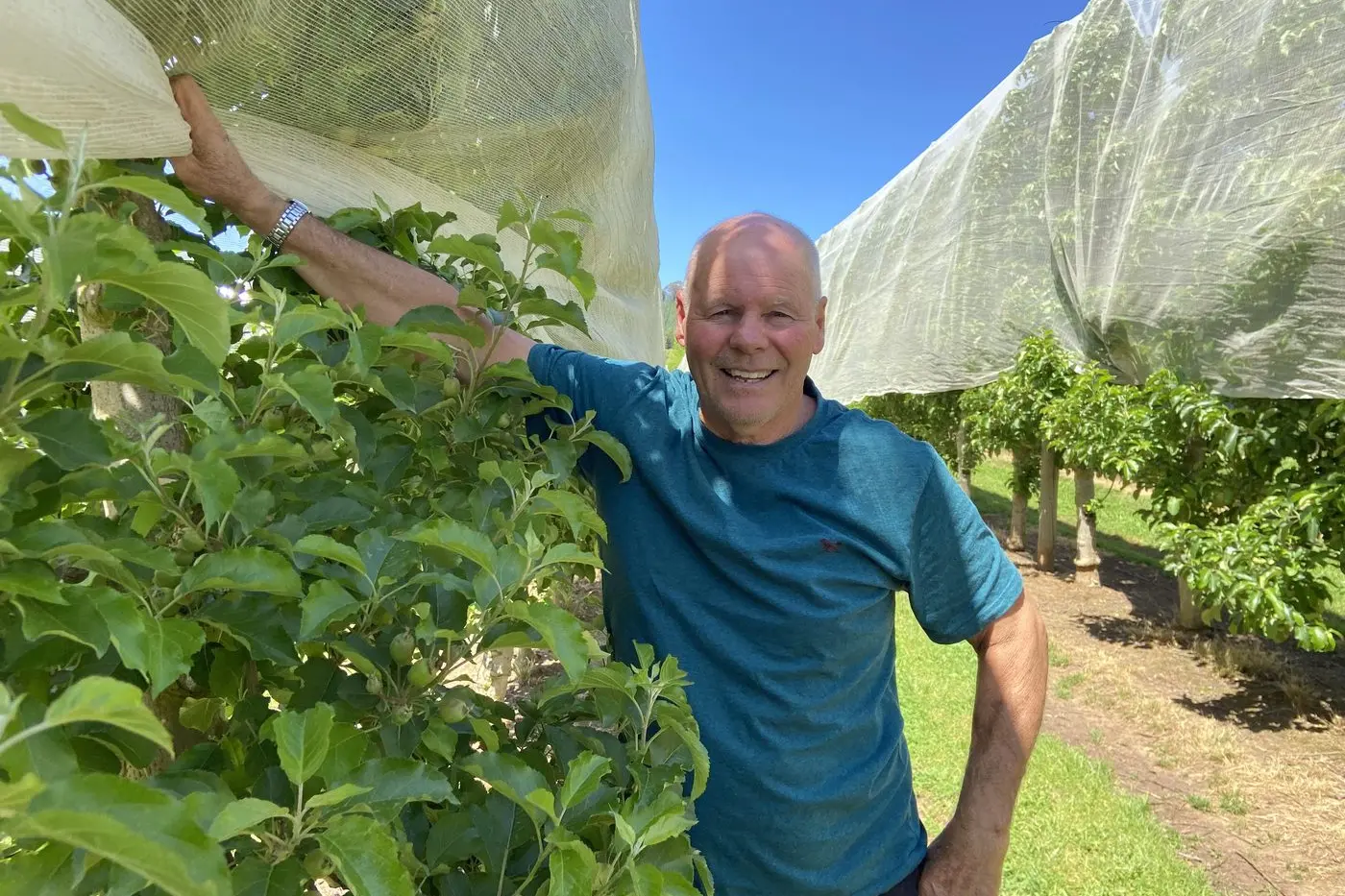
WALKING through the apple orchard at Nightingale Bros in Wandiligong on a sunny afternoon, it’s clear Don Nightingale will never leave this place.
As he reaches out and touches the trees, there’s a fondness and connection in that simple gesture that’s timeless and unshakeable.
Growing apples is in Don’s blood.
His earliest memories were of eating freshly stewed apples on this farm – his dad Keith, now 94, and late uncle Allan started the business after relocating from East Doncaster to Wandiligong in the winter of 1955.
Back then, it was a small apple orchard of 50 acres.
Nowadays, it has grown into an impressive operation – the Wandiligong site is 130 acres and the packhouse has a 12,000-bin capacity.
“It’s a satisfying challenge to grow a crop,” says Don, who is the orchard manager.
“I started working here when I was 17 and this will be my 51st season coming up.”
Nightingale Bros has six properties that grow apples and chestnuts.
They supply to wholesale markets in Melbourne, Sydney and Brisbane, and sometimes to the bigger supermarket chains of Aldi, Coles and Woolworths.
They also produce juices and ciders and have a retail store at Wandiligong.
Keith’s four children – Don, Ross, Bruce and Ann - are all involved in the business, as well as members of the younger Nightingale generation.
Meanwhile, Keith and his wife Marianne, both in their 90s, still live in the family home on-site.
If there’s an art to growing apples, the Nightingales are the maestros.
“Our job is to make them crunchy, otherwise we’re not doing our job properly,” says Don, 68.
“We want good, hard, solid fruit.”
To do that, the apples need to be picked in a certain timeframe – around 15 to 18 days from commencement of maturity.
The size of the apple is all about the grower, explains Don.
“If you want big fruit, you water more,” he says.
“If you want littler fruit, you back off the water and the fertiliser.”
Spring kicks off the growing season, then from February to May the apples are harvested.
During that period, there are usually around 150 workers hand picking fruit across the orchards.
The winter months are for pruning and planting trees.
Then the cycle begins again.
Nightingale Bros grow three club varieties – Kanzi, Jazz and Envy – plus a range of others.
With so many different options to choose from, how do you differentiate one variety from another? Don explains.
KANZI
Developed in Belgium, the Kanzi apple is a bi-colour (red and green) apple.
Crisp and delicious, it has a balanced sweet and tangy flavour.
JAZZ
Originating in New Zealand, the Jazz apple is quite similar to the Kanzi variety.
They are a very hard, bi-colour apple with a sweet-tart combo flavour.
ENVY
Also from New Zealand, the Envy is a large, solid type of sweet apple.
The peel is fairly thick.
They usually come in a shade of red with yellow specks.
GALA
Another Kiwi-born variety, Gala apples are known for their sweet, mild flavour.
If grown well, they are nearly a full blush (a vibrant red colour).
“These are inclined to be smaller, but we as growers are always pushing them to be bigger,” says Don.
GRANNY SMITH
If you like a very tart, sharp-tasting apple, the Granny Smith is your go-to variety.
Juicy and hard, the Granny Smith was developed in Australia and usually comes in a rich shade of green.
It’s great for cooking and making juices.
RED DELICIOUS
The Red Delicious variety of apples are quickly losing popularity, according to Don.
“We only grow 200-300 bins of Red Delicious a year,” he says.
“The supermarkets don’t give them shelf space and when that happens, there’s no point growing them. I think the new varieties are better tasting.”
Expect a bittersweet flavour and a very tough skin when biting into a Red Delicious.
FUJI
Originally from Japan, the Fuji apple has a juicy sweet, tangy flavour.
They are bi-colour (red and green) and fans love the crisp texture.
PINK LADY
A true Aussie apple, there’s no denying the Pink Lady (Cripps Pink) is a best seller.
Known for being a juicy, sweet-tart apple, the Pink Lady is well liked for its versatility (they are great for eating or juicing) and long shelf life.
“We would sell five cases of Pink Lady to one of everything else,” says Don.
“They are a very good keeping apple – up to 12 months.
"You’ll see pink ladies at Christmas time still looking nice and solid, whereas the others will be starting to look a bit tired.”
So, which is the pick of the bunch?
Contrary to what the masses may think, Don believes the Pink Lady is overrated.
“I often wonder why they are so popular,” he says.
“I don’t enjoy them myself. I find them very bitter, very tart.”
Choosing his favourite apple is a bit like choosing his favourite child, but if he had to select one, Don’s pick would be the Kanzi.
“I like the sweet apples – I have a sweet tooth,” he says, the hint of a mischievous smile forming.
“I never get sick of them.”
NOTE: Melissa Noble is a journalist, content writer and communications professional with over 15 years’ experience writing for different publications and brands. She lives in Bright with her three children and husband.