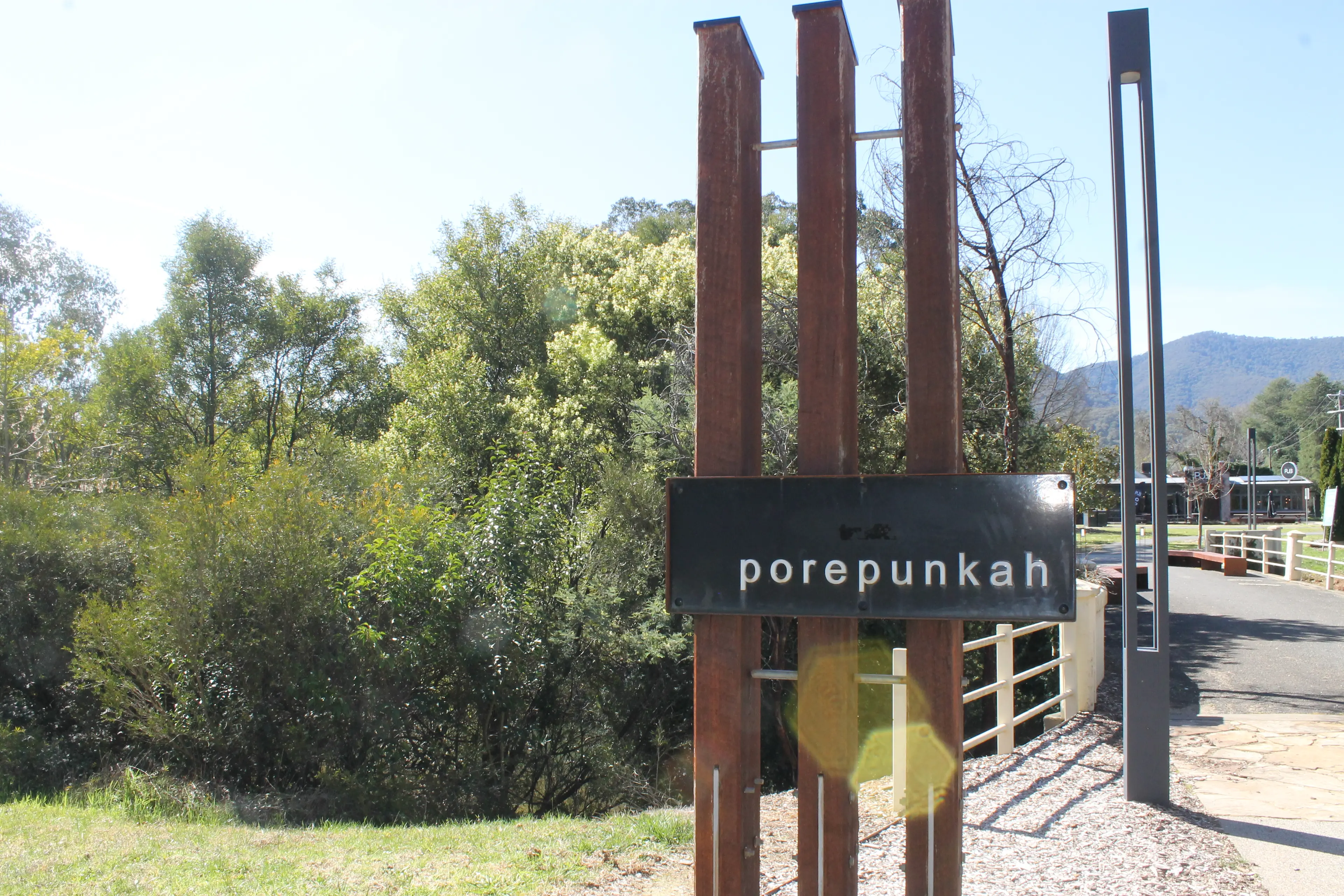
By BRUCE HORE, Bright and District Chamber of Commerce secretary As we mark the one year anniversary today, it is important our focus remains first and foremost on remembering Detective Leading Senior Constable Neal Thompson and Senior Constable Vadim de Waart-Hottart, who lost their lives in the line of duty, as well as recognising the third officer who was seriously injured and the many police, emergency service personnel, families and community members affected by the events. For the wider community, the past year has also demonstrated how interconnected our towns are. What happens in Porepunkah affects Bright, and what affects Bright flows through to businesses and communities across the Alpine Shire. The events of 26 August 2025 had a significant impact well beyond Porepunkah itself. First and foremost, it was a tragic event involving the loss of two police officers, and the effect on their families, colleagues and the wider community should never be forgotten. From a business and tourism perspective, the impact quickly spread across Bright and the broader Alpine Shire. The initial lockdowns, visitor warnings and uncertainty surrounding the ongoing police operation resulted in cancellations, reduced bookings and a sharp reduction in visitor confidence. Accommodation, hospitality and retail businesses were particularly affected, but the flow-on impact was also felt by suppliers, service providers and other businesses that rely indirectly on tourism. For a visitor economy such as ours, perceptions matter enormously. Although the incident occurred in Porepunkah, many visitors understandably viewed Bright, Porepunkah and the surrounding district as one destination, so the economic consequences were regional rather than confined to one township. There was also a less visible impact on businesses and residents. For an extended period people were dealing not only with reduced trade, but uncertainty, heightened media attention and concern about what the incident might mean for the reputation of the region. At the same time, the response demonstrated the resilience of our communities. Businesses, community organisations, Alpine Shire Council, Tourism North East and government agencies worked together to reassure visitors that the region remained a safe and welcoming destination and to encourage people to return. The situation today is considerably different to those first days and weeks. Immediately following the incident, businesses were operating in an environment of enormous uncertainty. There were official warnings about travel to the area, closures and a major police presence, and businesses had very little ability to predict when normal visitor patterns might resume. Even after the initial advice was eased, cancellations continued and it took time to rebuild visitor confidence. The uncertainty was prolonged by the fact the offender remained at large for several months. That situation was ultimately brought to an end in March 2026, which removed an important element of uncertainty for the community. A year on, the region is again welcoming visitors and operating normally. However, economic recovery does not happen as quickly as the lifting of a travel warning. A lost weekend, cancelled holiday or empty accommodation room cannot be recovered later, and many businesses entered the following months having already absorbed a significant financial loss. The focus has therefore shifted from immediate crisis response to rebuilding confidence, driving visitation and strengthening the region’s resilience. While some businesses have recovered strongly, others continue to feel the cumulative effects of the incident alongside the broader pressures facing regional businesses. Operating costs, insurance, utilities, wages, freight, staffing challenges and softer discretionary spending are all placing pressure on businesses. In a tourism-dependent economy those pressures can be magnified by seasonality and changes in visitor numbers. Our business community has shown considerable resilience. Businesses continued to adapt, invest and support each other through a very difficult period. The Bright and District Chamber of Commerce was fortunate to receive Victorian government grant funding to support business and community recovery following the Porepunkah incident. The chamber has focused on using this funding for initiatives that encourage visitation, support local businesses and create positive experiences within the region. One example was Fork in the Road, which was developed with support from Victorian government recovery funding. The event brought together local hospitality businesses and producers and was very well supported. The chamber is also working on a lighting project at the Porepunkah bridge, which is currently in the planning stages. This project is intended to create a welcoming and visually engaging feature for Porepunkah and provide another positive focal point for the community and visitors. We have been very conscious of using the recovery funding in ways that have a broader and lasting benefit – supporting our businesses, encouraging people to visit and spend locally, and helping reinforce the message that Bright, Porepunkah and the surrounding district remain vibrant and welcoming places to visit. The fact businesses are moving forward does not mean the financial impact of last year’s events simply disappeared. For some operators, rebuilding balance sheets and confidence takes considerably longer than rebuilding visitor numbers. For the wider community, the past year has also demonstrated how interconnected our towns are. What happens in Porepunkah affects Bright, and what affects Bright flows through to businesses and communities across the Alpine Shire. We would also like people to know that Porepunkah and the wider Bright and district region should not be defined by what occurred on one terrible day. This remains an extraordinarily strong, welcoming and resilient community. One of the most valuable things people can continue to do is visit the region, stay locally, eat locally, shop locally and support the many small businesses that form the backbone of our towns. There has been a great deal of work done over the past 12 months to move forward, while still respectfully remembering what occurred. Our aim now is to continue that recovery, build confidence in the region and ensure that the lessons and support that emerged from this experience contribute to a stronger local economy in the future.