
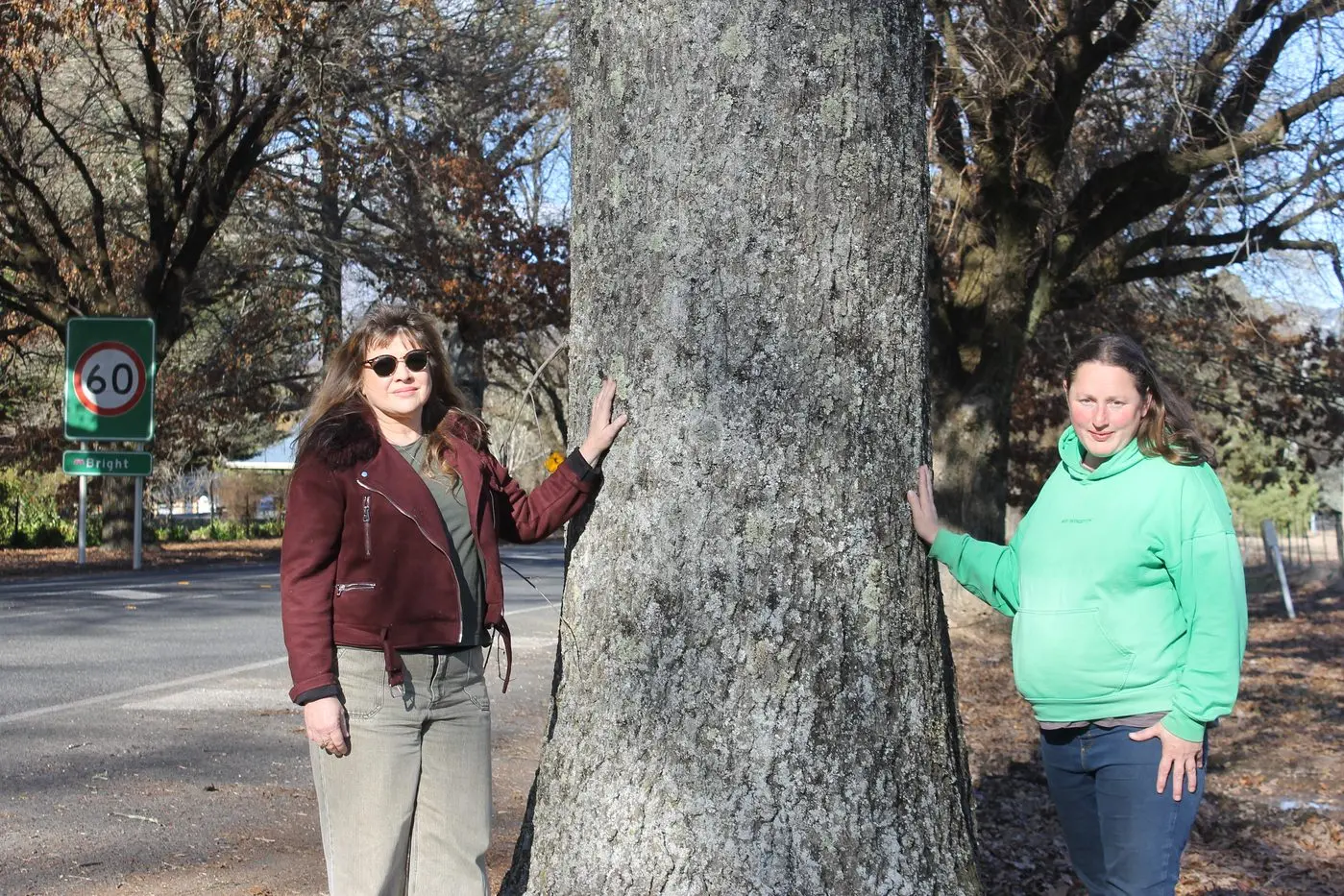
PHOTO
MEMBERS of Bright's 'Save the Gateway Trees in Bright' (SGTB) have welcomed moves for a heritage overlay to apply for some trees along the Great Alpine Way avenue entrance to Bright, but would still like to still see more done to protect the trees into the future.
Alpine Shire councillors last month agreed to apply a heritage overlay to one of four sections of trees on the western entrance to town.
The section contains the oldest trees - specifically Pin Oak and Dutch Elm trees planted in the 1960s - which, unlike the three other sections, have been deemed heritage worthy because of their local historical, aesthetic and social importance to Bright.
The overlay will not however, stop a permit granted in 2023 for the removal of two trees and relocation of three others to facilitate intersection access for the Bright Valley Development - a multi-stage residential development on adjoining land for up to 250 new homes.
And council officers told last month's meeting that the heritage overlay is not a "tool used to prevent development", but rather "when you are proposing buildings and works, you must consider the heritage significance of the place".
Group[
SGTB member Sue Ronco said one of the trees to be removed - a giant 26 metre high Pin Oak - is considered of 'high arboricultural value', "meaning that it should be retained and incorporated into the overall intersection design, according to the latest heritage report commissioned by council".
"The avenue contains mature Dutch Oak Trees, which have been confirmed as being 'globally significant' by Dr Greg Moore of Melbourne University.
"This is because Dutch Oak Trees in Europe have been decimated by Dutch Oak Beetle, while our trees remain healthy.
"We've heard council previously spent up to $50,000 per year to keep our Dutch Oaks free of disease, after a community campaign, 'Save the Elms' brought the issue to their attention around 20 years ago."
Heritage Victoria is currently considering the avenue of trees for state heritage significance and listing on the Victorian Heritage Register, after being nominated by members of the Bright community.
The intersection design to the entrance to the estate is currently being considered by VicRoads and will ultimately be put before council for final approval.
"We would like the intersection design and the tree management plan that will accompany it to be made public documents," Ms Ronco said.
"We still don't know what the eventual impact to the avenue will be.
"We feel the community should be kept informed as the avenue is too valuable to lose."
Fellow member Kath Healy said the removal of two trees and relocation of three others could potentially affect other neighbouring trees.
"When they dig down to those root systems, they are going to be intertwined with the root systems of other trees, which are 80-year-old-plus trees, and I believe that it's not just going to be these trees that will be affected," she said.
"It could potentially lead to a lot of loss in the trees through a domino effect."
Ms Healy said it is unclear where the three trees being relocated are moving to.
"We don't know if any isolated tree protection areas are included in the planning permit," she said.
"Perhaps VicRoads could find a work-around solution.
"One of our suggestions is they could run a service road behind the trees rather than removing any of the trees."