PHOTO
54885.0
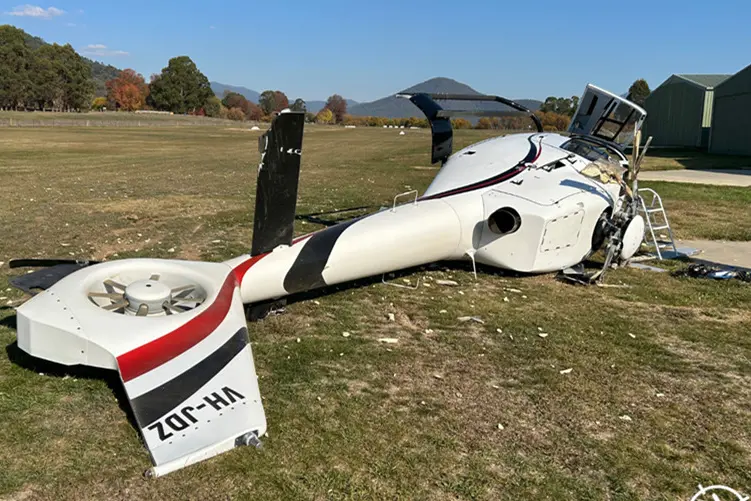
The pilot of an EC120 helicopter which crashed while attempting to take-off at Porepunkah Airfield on 15 May this year had not flown that type of heli in almost 15 years, according to the Australian Transport Safety Bureau (ATSB).
It released its final report last week into its investigation into the accident, involving a Eurocopter EC120B taking off from Porepunkah with the pilot and a passenger on board, for a planned private flight to Albury.
The ATSB said while the pilot was highly experienced in helicopter operations, held a commercial licence and was endorsed on the EC120, he had not flown one for about 15 years.
“The EC120’s ‘Fenestron’ shrouded tail rotor requires greater pedal response than conventional tail rotors such as those on helicopters like the Robinson R44, which the pilot had primarily flown in the 12 months prior to the accident,” ATSB director transport safety Dr Stuart Godley noted.
As the helicopter was lifting into a hover, it was allowed to yaw (rotate about its vertical axis) to the left without correction.
After the helicopter turned through about 180°, the pilot attempted to arrest the yaw with right pedal input, but this was insufficient to correct the uncontrolled turn.
During the turn, the right skid contacted the ground, and the helicopter rolled over, resulting in substantial damage.
Fortunately, both occupants then exited the helicopter uninjured.
“Although a highly experienced helicopter pilot, the pilot’s lack of recent type experience on the EC120 degraded their ability to anticipate and counter the left yaw,” Dr Godley said.
The yaw control characteristics of the EC120 were sufficiently different to produce effects in excess of the pilot’s expectations, the report notes.
The EC120 yaws to the left – rather than to the right like the R44 – on application of power and also requires a larger opposite pedal input to arrest yaw.
“Being highly experienced flying helicopters, this likely increased the pilot’s perception of their ability to operate the EC120, even though they had not operated the aircraft type for several years,” Dr Godley noted.
“This highlights the importance of maintaining recent type‑specific flight experience when transitioning between aircraft with differing control characteristics, and maintaining an understanding of the specific characteristics of the aircraft you fly.”